Eco-Friendly Flowers: What Makes a Bloom Sustainable (and How to Buy Them)
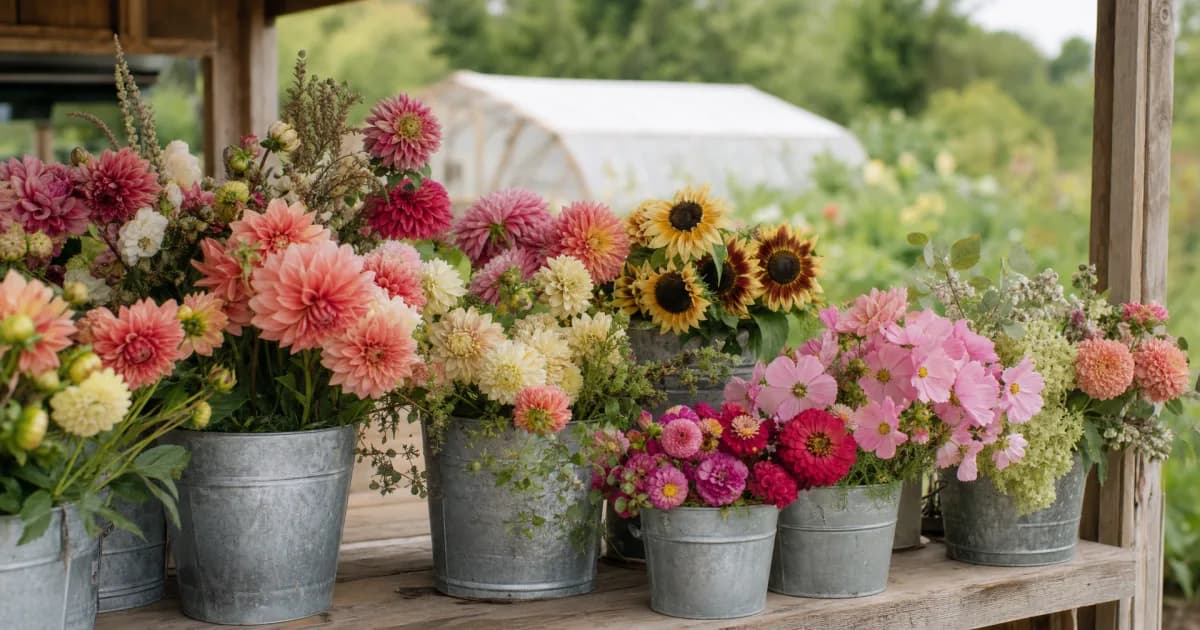
"Eco-friendly flowers" sounds like it should be the default. Flowers are plants, after all. But most cut flowers sold in the US travel thousands of miles, are grown with heavy pesticide use, and arrive propped up in single-use plastic foam. An eco-friendly flower is a deliberate choice, not a given. Here's what actually makes a bloom sustainable — and how to find flowers that live up to the label.
What makes flowers eco-friendly?
There's no single certification that stamps a flower "eco-friendly," so it helps to think in terms of a few factors that add up. The greenest flowers tend to tick most of these boxes:
- Locally and domestically grown. The closer to home, the less long-haul transport and refrigeration involved.
- In season. Seasonal flowers grow in natural conditions, without the energy-hungry greenhouses or long flights that out-of-season blooms depend on.
- Grown without synthetic pesticides. Organically or with low-input methods that protect soil, water, and pollinators.
- Arranged foam-free. Without the single-use plastic floral foam that crumbles into microplastics.
- Grown under fair labor conditions. Workers paid and protected properly — a genuine issue in large-scale international flower farming.
No flower will be perfect on every count, and that's fine. A locally grown bloom that used a little pesticide is still far greener than a rose flown in from another hemisphere. The goal is better, not perfect.
Why aren't conventional flowers eco-friendly?
To see why the eco-friendly version matters, look at the conventional one. About 80% of cut flowers sold in the US are imported, mostly from Colombia and Ecuador, and most travel by refrigerated air freight. They're frequently grown with pesticides that are restricted or banned in the US, and the whole supply chain runs on constant refrigeration from farm to store.
Then there's the floral foam most arrangements are built on — a single-use plastic that never fully breaks down and sheds microplastics into the water system. Add it up, and a typical supermarket bouquet carries a much bigger footprint than its price tag suggests.
How do you recognize genuinely eco-friendly flowers?
Because "eco-friendly" and "sustainable" aren't regulated terms for flowers, a handful of certifications and signals do the verifying for you:
- USDA Organic — grown without synthetic pesticides or fertilizers, the same standard used for organic food.
- Certified American Grown — independently audited proof the flowers were grown in the USA.
- ASCFG (Association of Specialty Cut Flower Growers) — membership marks small, specialty growers focused on local, seasonal flowers.
- Veriflora and BloomCheck — sustainability certifications covering growing practices, water use, and worker welfare.
Beyond the badges, the simplest test is to ask where the flowers come from. If a florist can't tell you, that itself tells you something. Our guide to choosing an eco-friendly florist covers the exact questions worth asking.
Are organic flowers the same as eco-friendly?
Not quite. Organic is one important dimension — it means no synthetic pesticides or fertilizers — but on its own it doesn't account for how far the flowers traveled or whether they're in season. An organic rose flown in from overseas still carries a heavy carbon footprint. The most sustainable choice usually pairs organic or low-pesticide growing with local, seasonal sourcing. Think of organic as one strong signal among several, not the whole story.
Where do eco-friendly flowers come from?
Eco-friendly flowers travel a different supply chain than the grocery-store bucket. The main sources:
- Local flower farms. Small growers selling field-grown, seasonal flowers through farm stands, farmers markets, and u-pick days.
- Flower CSAs and subscriptions. A weekly or biweekly share of whatever's in bloom, straight from a farm.
- Farmers markets. Many flower farms sell directly here through the growing season.
- Eco-minded florists. Retail florists who source domestically and arrange without floral foam.
You'll usually pay a little more than a supermarket bunch, but the flowers are fresher, last longer in the vase, and the money stays in the local economy.
The easiest win: buy what's in season
If you remember one thing, make it this. Seasonal flowers grow in natural conditions close to home, which sidesteps both the greenhouse energy and the long-haul transport that out-of-season flowers rely on. Tulips and ranunculus in spring, sunflowers and zinnias in summer, dahlias and chrysanthemums in fall. In winter, dried flowers, branches, and forced bulbs like paperwhites are the low-impact options — and they tend to be more interesting than a uniform box of imported roses anyway.
How to find eco-friendly flowers near you
The hard part of buying eco-friendly flowers used to be finding them. That's exactly what we built Ethical Blooms for: a free directory of verified eco-friendly florists and flower farms across the US, searchable by state and city, with transparent credential badges so you can see what makes each one sustainable. Find growers and florists near you — and skip the imported, foam-packed bouquet.
Find eco-friendly flowers near you
Browse verified eco-friendly florists and flower farms by state, with transparent sustainability credentials.
Browse by State