How to Make Cut Flowers Last Longer (8 Tips + Homemade Flower Food)
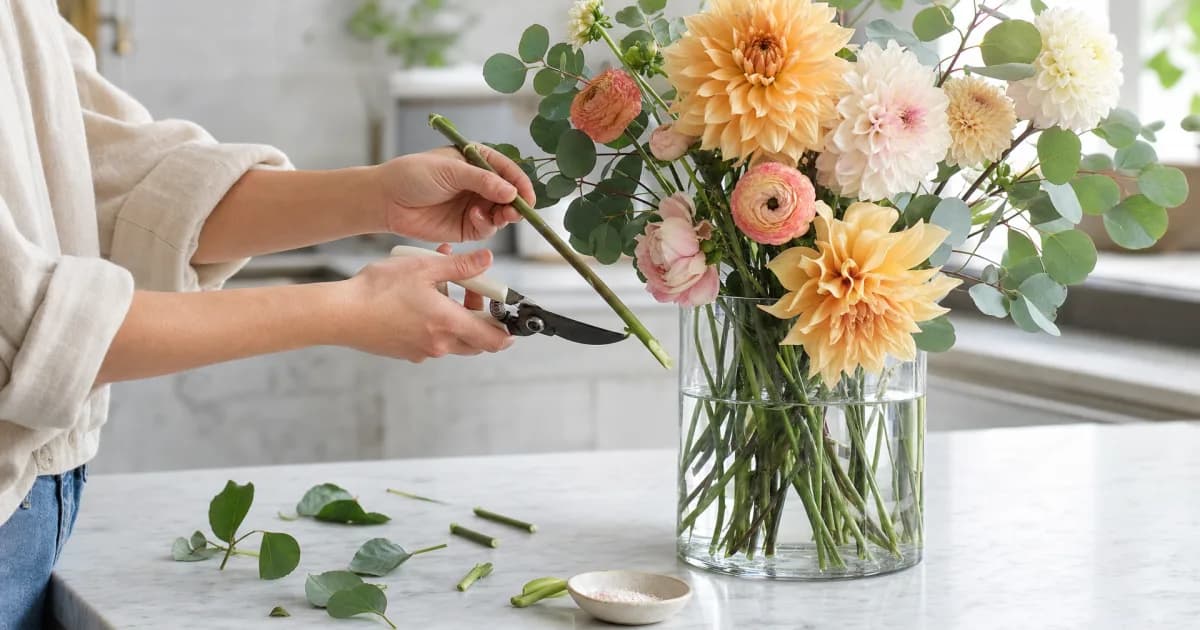
Most bouquets die earlier than they should, and almost always for avoidable reasons — murky water, an old cut, or a warm windowsill. Give cut flowers the right care and you can often double their vase life. Here's how florists keep flowers fresh, including a homemade flower food recipe and how to handle a few tricky stems.
How long do cut flowers last?
With good care, most cut flowers last 7 to 12 days. Hardy types like chrysanthemums, carnations, and alstroemeria can go two weeks or more. Delicate flowers like dahlias and poppies are at the other end — often just 3 to 5 days. Freshness at the start matters as much as care afterward, which is why locally grown, seasonal flowers tend to outlast a bunch that spent a week in transit before it reached you.
8 ways to make cut flowers last longer
- Start with a spotlessly clean vase. Bacteria is the number-one killer of cut flowers — it multiplies in the water and clogs the stems so they can't drink. Wash the vase with hot, soapy water before you start.
- Trim the stems at an angle. Cut 1–2 inches off each stem at a 45-degree angle with a sharp knife or snips. The angle exposes more surface area for drinking and stops the stem from sitting flat on the bottom of the vase. Re-trim every couple of days.
- Strip any leaves below the waterline. Submerged leaves rot quickly and feed bacteria. Remove every leaf that would sit underwater.
- Use flower food — or make your own. The little packet does real work (more on what's in it below). No packet? See the homemade recipe further down.
- Use lukewarm water. Most flowers drink lukewarm water more readily than cold. The exception is spring bulb flowers like tulips and daffodils, which prefer cold water.
- Keep them cool and out of the sun. Heat, direct sunlight, and drafts all speed wilting. A cooler spot away from radiators and windows makes a real difference.
- Keep flowers away from the fruit bowl. Ripening fruit gives off ethylene gas, which ages flowers fast. Don't display a bouquet next to bananas or apples.
- Refresh the water every two days. Tip out the old water, rinse the vase, add fresh water and food, and re-trim the stems. Pull out any flowers that have gone over — a single rotting stem speeds up the rest.
What is cut flower food, and do you need it?
That sachet of flower food isn't a gimmick. It does three jobs at once:
- Sugar feeds the flowers, since they're cut off from the plant that used to nourish them.
- An acidifier lowers the water's pH so it travels up the stem more easily and stays clear.
- A biocide (a tiny amount of bleach) kills the bacteria that would otherwise clog the stems.
All three matter, which is why a spoonful of sugar alone doesn't cut it — without the biocide, the sugar just feeds bacteria. Use the right dose, too: too much food can actually shorten vase life.
Homemade flower food recipe
Out of the packet? This mimics what a commercial sachet does. Per quart (about 1 liter) of lukewarm water:
- 1 teaspoon sugar (the food)
- 2 teaspoons lemon juice or white vinegar (the acidifier)
- 1 teaspoon household bleach (the biocide — keeps the water clear)
Stir until the sugar dissolves, then fill the vase. Refresh it with a new batch each time you change the water.
Flowers that need special handling
A few common flowers don't play by the standard rules:
- Tulips keep growing and bending toward the light after they're cut. Wrap them snugly in paper for a few hours if you want them to straighten, and expect them to move.
- Daffodils and narcissi leak a sap that's harmful to other flowers. Condition them on their own for several hours before mixing them into an arrangement.
- Woody stems like lilac, hydrangea, and viburnum drink poorly. Cut them at a sharp angle; hydrangeas in particular can be revived by submerging the whole flower head in water for half an hour.
- Dahlias and zinnias are thirsty and short-lived — keep the water topped up and enjoy them while they last.
The freshest flowers last the longest
Care goes a long way, but it can't reverse a head start spent in a cargo hold. Around 80% of cut flowers sold in the US are imported, often days old by the time they're bought. Flowers from a local grower are usually cut within a day or two of sale, so they start their vase life fresher and finish it later. If you want blooms that last, the simplest upgrade is buying local, seasonal flowers in the first place.
Frequently asked questions
How long do cut flowers last?
With good care, most cut flowers last 7 to 12 days. Hardier types like chrysanthemums, carnations, and alstroemeria can last two weeks or more, while delicate flowers like dahlias and poppies may only last 3 to 5 days.
Does flower food actually work?
Yes. Flower food combines sugar for nutrition, an acidifier that helps water travel up the stem, and a small amount of biocide that kills the bacteria which clog stems. Used at the right dose, it noticeably extends vase life compared with plain water.
What can I use instead of flower food?
A simple homemade mix works. Per quart (about 1 liter) of lukewarm water, stir in 1 teaspoon of sugar, 1 teaspoon of household bleach, and 2 teaspoons of lemon juice or white vinegar. The sugar feeds the flowers, the acid aids water uptake, and the bleach keeps bacteria down.
Do cut flowers last longer in the fridge?
They can. Cold slows aging, which is why florists store flowers in coolers. At home, moving a bouquet to a cool room or the fridge overnight — kept away from fruit, which releases flower-aging ethylene gas — helps it last longer.
Start with fresher, longer-lasting flowers
Locally grown, seasonal flowers reach you fresher — and last longer. Find eco-friendly florists and flower farms near you.
Browse by State